
Blog Back New Study Confirms Link Between COVID-19 And Symptoms Of Hearing Loss, Tinnitus, And Vertigo May 10, 2021 Now that we have been dealing with the global COVID-19 pandemic for over a year now, you have probably learned that symptoms of COVID can vary from person to person. Some people experience difficulty breathing, while others only suffer from a loss of taste or smell. Some people experience nausea or vomiting, while others have a fever and chills. You may also know that certain viruses can lead to hearing difficulties, including measles, mumps, and meningitis. But what about the coronavirus? Could one of the varying symptoms of COVID-19 be an effect on your hearing? A new study found that yes, there is a link between COVID-19 and symptoms of hearing loss, tinnitus, and vertigo. Tinnitus is the most common hearing symptom reported by those suffering from COVID-19. Tinnitus, or ringing in the ears, is a fairly common condition on its own, with nearly 15 percent of the population (approximately 50 million Americans) experiencing some form of tinnitus. Most people who experience tinnitus also have hearing loss, which suggests a close link between the two conditions. Researchers suspect that tinnitus is one of the first signs that the hearing system has been damaged by factors like excessive noise or ototoxic drugs. Tinnitus has been reported to be a common symptom of what is referred to as “long COVID,” which is where symptoms persist weeks or even months after the infection is gone. The exact connection between tinnitus and COVID-19 is unclear. It may be that the virus affects the auditory system, or tinnitus may be caused by stress from the pandemic. While tinnitus is most frequently reported by those suffering from long COVID, hearing difficulties have been reported by patients of a wide age range who experienced the illness in varying degrees of severity. Hearing loss has been reported among those with mild cases that were managed as home, as well as among severe cases that required hospitalization. There have also been several reports of sudden hearing loss in one ear, accompanied by tinnitus, from patients with COVID-19. Research has found that viruses can cause sudden hearing loss, so SARS-CoV-2 may be responsible for the cases of sudden hearing loss reported in COVID patients. However, because of the high number of COVID patients worldwide, it is difficult for researchers to determine whether the rate of sudden hearing loss is higher than normal. Many COVID patients also report dizziness as a symptom of the disease. Dizziness may be difficult to differentiate from rotatory vertigo, which is caused by damage to the balance system in the inner ear. The best estimate from current surveys and reports is that rotatory vertigo occurs in approximately 7 percent of COVID cases. From these reports, it is clear that COVID-19 is linked to hearing difficulties, including hearing loss, tinnitus, and vertigo. Further research is needed to more fully establish the connection and the true cause of these symptoms. To learn more about how COVID and hearing problems are linked, we invite you to contact our hearing clinic today. We are eager to assist you. Share :
Category: Uncategorized
How Does Hearing Loss Affect Men And Women Differently?
Blog Back How Does Hearing Loss Affect Men And Women Differently? April 26, 2021 Hearing loss doesn’t discriminate—it can affect anyone of any age or any race. But does hearing loss affect men and women equally? According to the latest research and surveys, yes. This data shows that more men than women are affected by hearing loss—with rates of hearing loss being nearly twice as high in men than in women.Although no one knows all of the reasons why men experience hearing loss more frequently than women, audiologists have hypothesized a few explanations for this difference. Here are some reasons men may experience hearing loss more than women: Workplace noise Noise-induced hearing loss (NIHL) is a common type of hearing loss. One study found that men may experience NIHL at nearly three times the rate of women. Experts suggest this difference may be tied to workplace noise.While careers and industries of all types are open to both men and women, some careers are male-dominated. These include several types of jobs that may have high levels of noise, such as military careers, construction sites, factory or manufacturing work, farming, flight crew, or emergency workers and first responders like policemen, firemen, and ambulance drivers. Medication use Certain medications, known as ototoxic medications, are known to cause hearing loss. It is believed that men use ototoxic medications at a higher rate than women, which exposes them to a higher risk of hearing loss. Ototoxic medications include non-steroidal anti-inflammatory drugs (NSAIDs) like aspirin, ibuprofen, and naproxen, certain antibiotics, certain cancer drugs, and more. Seeking help Although men appear to experience hearing loss at a greater rate than women, both genders suffer from hearing loss. Another difference exists, however, in how men and women handle hearing loss. Women are more likely than men to seek professional care for their hearing loss.In addition, women are often more willing to admit to their friends and family that they suffer from hearing loss. This can lead to better hearing solutions for living with hearing loss day-to-day, such as choosing restaurants with lower noise levels, friends and family speaking more clearly, and other accommodations for the person with hearing loss. Because women are more likely to seek treatment and ask for help, they typically experience fewer negative social effects and have a higher quality of life. Differences in hearing loss Another difference between men and women who experience hearing loss is how the hearing loss manifests itself. Men are more likely to lose the ability to hear higher frequencies first, while women are more likely to have difficulty hearing lower frequencies. While both of these issues can cause long-term problems, men may experience more negative social effects because they can hear fewer high-frequency sounds, including higher-pitched voices.So, what does this mean for you? If you work in a noisy environment, be sure to use appropriate ear protection to avoid hearing loss. If you use ototoxic medications, speak to your doctor about whether another medication option is available that will not endanger your hearing. Men can also learn to better recognize the symptoms of hearing loss and seek professional treatment when necessary.To learn more about how men and women experience hearing loss differently, we invite you to contact our hearing professional today. Share :
Do You Have A Stubborn Loved One? Here’s How To Help Them Wear Hearing Aids.

Blog Back Do You Have A Stubborn Loved One? Here’s How To Help Them Wear Hearing Aids. April 21, 2021 It probably is not news to you that some people can be very stubborn and set in their ways. This can be especially true of older people who do not want to wear hearing aids—and may not even want to acknowledge that they are experiencing hearing loss. If you have a loved one who needs hearing aids and is reluctant to do so, you are not alone.Here are some simple tips you can use to help your loved one be more willing to wear their hearing aids: Highlight the positives. It can be easy to talk about the negative effects of hearing loss, like social isolation, loneliness, depression, anxiety, and more. But put yourself in your loved one’s shoes—would you like it if someone only discussed negative effects with you? This approach can seem very heavy-handed and can put your loved one on the defensive.It can be much more persuasive to focus on the positive effects that hearing aids could bring to their life. Talk with your loved one about how they will be better able to enjoy music, hear the sounds of nature, communicate more easily with friends and family, and more. Focus on the facts. Instead of focusing on how hearing loss negatively impacts your loved one’s life (and your own), which can result in a very emotionally charged discussion, talk about the facts of hearing aids. Highlight features like Bluetooth connectivity, the ability to reduce background noise, and other impressive high-tech aspects of modern hearing aids. Be gentle. Take a soft approach to help your loved one wear hearing aids. Do not try to pressure them or guilt them into scheduling an appointment with an audiologist or hearing aid professional. Hearing loss can be a sensitive subject, so approach it with care. Try to understand your loved one’s feelings and work with them. Address the cost. One common concern among people who need hearing aids is the cost. Even if a person understands how hearing aids could positively affect their life, they may feel reluctant if they do not know how much they will be spending to get their hearing aids. Explain that hearing aids can range in price depending on the type and how high-tech they are. Your hearing aid professional can work with you and your loved one to find a solution that fits both their hearing needs and their budget. Go with them. Some people do not like to go to the doctor on their own. They might feel uncertain about going places alone with hearing loss because they might not hear a question from the staff, or they may feel nervous about discussing their health history. Offer to attend their appointment with them to assist them and offer emotional support. Ask them why. Your loved one might be feeling stubborn about wearing hearing aids for a reason that is completely different from what you assume! The best way to find out why they are being stubborn is to ask them. Be sure to make clear that you will not be judgmental or dismissive of their concerns. Listen attentively and respond with care to address their worries.If you would like more ideas on how you can help your loved one wear hearing aids, or if you need to schedule an appointment, please contact our hearing professional today. We are eager to care for you. Share :
Face Coverings Highlight Hearing Loss

Blog Back Face Coverings Highlight Hearing Loss March 8, 2021 The COVID-19 pandemic has given us all a new accessory to wear out in public: the face mask. Some people see the face mask as simply a tool to help prevent the spread of the virus. Others see it as a fashionable accessory that can be personalized to their tastes. And for some people, wearing a face covering has made hearing problems more obvious.According to the Hearing Loss Association of America, approximately 48 million Americans have some degree of hearing loss. However, people with hearing loss wait an average of 7 yearsbefore seeking professional help. Many of these people use lip and speech reading to help them understand any words or phrases they could not hear well. They could also use facial expressions and cues to pick up on the overall message of the speaker. In short, these people with hearing loss would adapt as best they could until the problem became severe enough that they had no other option than to seek help.In the age of COVID, however, people living with hearing loss can no longer rely on lip and speech reading or visual cues; these are all hidden by face coverings. Even transparent face masks can pose some degree of difficulty for those who read lips. In addition, wearing a face mask tends to muffle the volume of sound and affect the pitch range of speech, making it even more difficult for someone with hearing loss to understand what is being said.While those with mild to moderate hearing loss could have hidden or ignored their condition for a period of time prior to COVID, in today’s environment, they can no longer “get by” with adaptations. Audiologists around the world have seen an increase in patient visits as people with hearing loss come to the realization that they must seek help in order to function in a world where everyone wears a face mask.Even people who have previously sought professional help and now use hearing aids have found that they need additional help at this time. Hearing aid professionals have noted that many people who use hearing aids have come in for adjustments so they can better hear and understand people who speak while wearing a face mask. While they may have previously thought that their hearing aids worked well enough, the challenges posed by face masks have highlighted areas for improvement.If you suspect that you may have hearing loss, or if you have noticed increasing difficulty in understanding speech when people are wearing face masks, we encourage you to visit your hearing healthcare professional. A simple hearing evaluation can determine whether you have hearing loss, and your hearing professional can recommend the treatment that is best for your specific needs and preferences.If you already use hearing aids and still experience difficulty hearing while using a face mask, you can also benefit from speaking with a hearing aid professional. To learn more about how we can help you hear better, we invite you to contact our office today. Share :
Kidney Disease And Hearing Loss

Blog Back Kidney Disease And Hearing Loss March 1, 2021 In an 8 year study** it was discovered older adults (50+) with moderate chronic kidney disease (CKD) have a higher prevalence of hearing loss than those of the same age without CKD. A recent study found that more than 50% of the adults in the study with moderate kidney disease had some degree of hearing loss, while almost 30% suffered a severe hearing loss. 15% of US adults—37 million people—are estimated to have CKD.* Most (9 in 10) adults with CKD do not know they have it. 1 in 2 people with very low kidney function who are not on dialysis do not know they have CKD. While the study may not confirm a cause-and-effect relationship between CKD and hearing loss, it sends a clear message to primary-care physicians, urologists and nephrologists that it’s important for anyone with kidney disease to be given a formal hearing evaluation on a periodic basis. The connection between the parallels in tissue of the kidney and the inner ear. Also, there are toxins that build-up in failing kidneys that can damage nerves including those in the ear. Also, some treatments for kidney ailments are ototoxic, which means toxic (harmful) to the hearing system. “These findings could lead to a modification of the usual care of people with CKD,” said Dr. Kerry Willis, Senior Vice President of Scientific Activities at the National Kidney Foundation. “Earlier clinical hearing assessments and fitting of hearing aids in CKD patients can improve quality of life and lead to better management of underlying conditions which could, in turn, potentially preserve hearing function.”*** Be proactive and ask your doctor to order a formal hearing evaluation with a reputable audiology practice to have your hearing tracked while you are treating for kidney disease, heart disease, diabetes, hypertension. Treatment for hearing loss is much more effective when treated early. If you have questions regarding your hearing and a possible kidney disease correlation contact your audiologist. https://www.ajkd.org/article/S0272-6386(10)00963-7/fulltext** https://www.kidney.org/news/ekidney/november10/HearingLoss_November10*** https://www.cdc.gov/kidneydisease/publications-resources/2019-national-facts.html#calculation* https://www.cdc.gov/kidneydisease/pdf/2019_National-Chronic-Kidney-Disease-Fact-Sheet.pdf Share :
Smartphone Apps That Support Hearing Aids— How To Know Which Ones Work Well
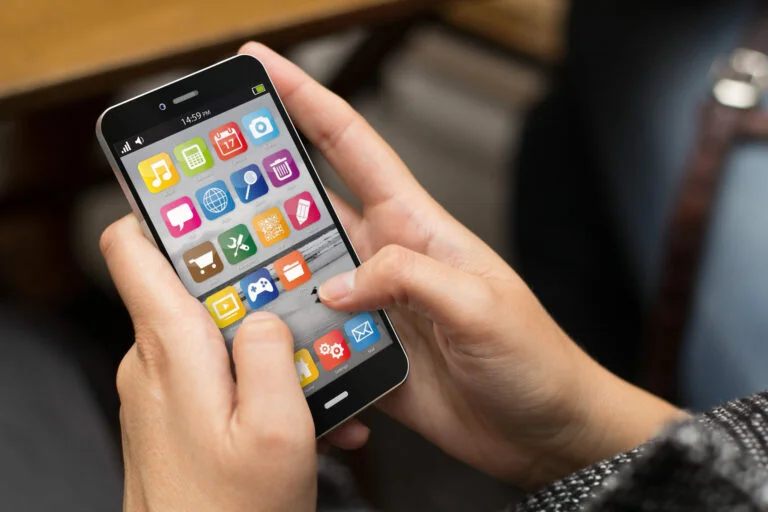
Blog Back Smartphone Apps That Support Hearing Aids— How To Know Which Ones Work Well February 18, 2021 Have you ever heard the phrase, “There’s an app for that”? While this phrase was first used over a decade ago (Apple began using this slogan in their advertising in 2009), it has never been truer than it is now. You can download an app to your smartphone to do just about anything you want—to check the news, keep you updated on the weather in your area, chat with people halfway around the world, remind you to drink more water, do your banking right from your phone, keep an online journal, and much, much more.So, what about when it comes to your hearing aids? Yes, there’s an app for that, too. There are, in fact, numerous smartphone apps now available that support hearing aids. How do you know which ones work well? Here are a few key features you might want to look for when you are considering apps to support your hearing aids: Apps created by hearing aid manufacturers Many hearing aid manufacturers now have their own apps. The app created by the manufacturer of your particular hearing aids might be one of the best for you to use. These apps are typically custom made to work seamlessly with your specific hearing aids. So, if you are new to using a smartphone app with your hearing aids, start by downloading and exploring the app made by your hearing aid manufacturer. Adjust your hearing aids If you wear hearing aids, chances are good that you’ve been in a situation before where your hearing aid settings weren’t quite right. An app allows you to adjust the treble, bass, volume, and other sound settings right from your phone. Not only is this incredibly simple, but it can also be more discreet than reaching up your ears to adjust your hearing aids. Battery life notifications Choosing an app that notifies you when your hearing aid batteries are low can allow you to recharge or replace the batteries before they die. Direct audio connection Using Bluetooth, apps allow your hearing aids to connect directly to audio. This means music, podcasts, TV shows, and more can stream directly to your hearing aids. Custom hearing programs As mentioned above, your hearing aids might need to be adjusted for certain settings. For example, maybe you always find it challenging to hear well when you go to a particular restaurant. Using your app, you can create a custom hearing program that you specify to this setting, and then you can save the program to use again when you visit in the future. The app may also save the information so you can share it with your audiologist, which can help them better understand the settings that offer challenges. Statistics and location An app can offer statistics regarding your hearing aids, such as how many hours you wore them per day, week, or month. The app may also track the location of your hearing aids, which can be helpful if you misplace your devices. Hearing aid manual and instructions One of the benefits of using an app created by the hearing aid manufacturer is the availability of the manual and instructions for your particular device. This might be especially helpful if your hearing aids are new to you. Plus, it is certainly more convenient to access the manual via your smartphone than to carry the manual around with you! Communication with your hearing aid specialist For almost a year now, many audiology practices have limited in-office appointments. Even if you cannot see your hearing care professional in person, or if you want to avoid the health risks of doing so, you can communicate with them via your hearing aid app. These apps allow your hearing healthcare specialist to conduct a hearing test, adjust your hearing aids, fit the hearing aid, and much more.It may be hard to believe at first, but some hearing aid apps offer even more features than these! To learn more about how an app can help you control your hearing aids, we welcome you to contact our hearing care practice today. Share :