
Noise-Induced Hearing Loss and the Workplace: Protecting Your Hearing on the Job
- June 22, 2026
Noise-Induced Hearing Loss and the Workplace: Protecting Your Hearing on the Job
For many people, noise is simply part of the workday. Whether it’s the roar of heavy machinery, the constant hum of equipment, or the sounds of power tools, repeated exposure to loud noise can gradually damage hearing. In fact, noise-induced hearing loss (NIHL) is one of the most common occupational health concerns, affecting millions of workers each year. The good news is that it is often preventable.
In this blog post, we will explore how and where noise-induced hearing loss is most likely to occur in the workplace, the signs of noise-induced hearing loss, and how you can protect your hearing on the job.
Which Occupations Have the Highest Risk for Noise-Induced Hearing Loss?
Certain jobs expose workers to loud sounds on a regular basis, making hearing protection especially important. Occupations that commonly carry a higher risk of noise-induced hearing loss include:
- Construction workers
- Manufacturing and factory employees
- Farmers and agricultural workers
- Military personnel and veterans
- Airport and airline ground crews
- Police officers and first responders
- Landscapers and groundskeepers
- Miners and oil field workers
- Transportation workers
- Musicians, DJs, and entertainment professionals
Even office workers can be exposed to damaging noise if they work in industrial environments or spend long hours using headsets at high volumes.
The risk increases when sounds reach 85 decibels or higher for extended periods. Over time, these loud noises can damage the delicate hair cells inside the inner ear. Once damaged, these cells do not regenerate, making hearing loss permanent.
Symptoms of Noise-Induced Hearing Loss
Noise-induced hearing loss often develops gradually, which means many people may not notice the changes right away. Common signs and symptoms include:
- Difficulty understanding conversations, especially in noisy places
- Frequently asking others to repeat themselves
- Needing to turn up the television or radio volume
- Trouble hearing high-pitched sounds
- Feeling that people are mumbling
- Ringing, buzzing, or hissing in the ears (tinnitus)
- Trouble following group conversations
Because the changes can occur slowly, regular hearing evaluations are important for anyone who works in a noisy environment.
How to Protect Your Hearing at Work
Taking steps to protect your hearing today can help preserve it for years to come. Here are several ways to reduce your risk:
Wear Hearing Protection
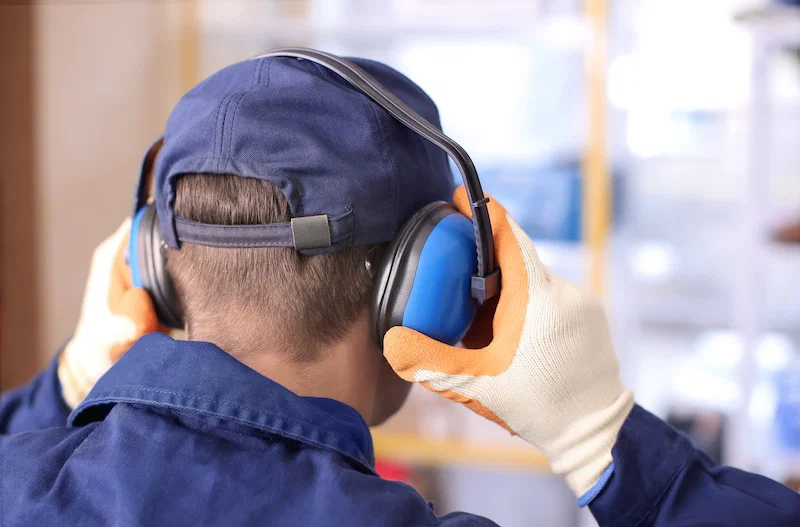
Earplugs and earmuffs are among the most effective ways to reduce noise exposure. Many workplaces provide protective devices designed specifically for the type of noise employees encounter.
Follow Workplace Safety Guidelines
Employers may implement hearing conservation programs that include noise monitoring, protective equipment, and employee education. Following these recommendations can significantly lower the risk of hearing damage.
Limit Exposure When Possible
Take breaks from noisy environments whenever possible. Reducing the amount of time spent around loud sounds can lessen the cumulative effects on your hearing.
Keep Personal Listening Devices at Safe Levels
If you use headphones or earbuds during work, avoid high volume settings. Listening at moderate levels helps prevent additional hearing damage.
Schedule Regular Hearing Tests
Routine hearing evaluations can detect changes early, often before symptoms become noticeable. Early identification allows you to take steps to prevent further hearing loss.
Don’t Ignore the Warning Signs
Noise-induced hearing loss can affect communication, job performance, and overall quality of life. If you work in a loud environment or have noticed ringing in your ears or difficulty hearing conversations, a comprehensive hearing evaluation can help determine whether hearing loss is present.
Protecting your hearing is an investment in your long-term health. Small steps taken today can make a big difference in preserving your hearing for the future. For more information about how you can protect yourself from noise-induced hearing loss at work, we welcome you to contact us today.
We’ve been serving the Southern Connecticut community for over 30 years and aim to make the road to better hearing an easy and comfortable one.

Delray Beach Office
Opening Hours:
Hours of Operation – Hours are by Appointment Only
Milford office
Monday and Wednesday 10:00 AM – 4:30PM
East Haven office
Monday, Tuesday and Thursday 9:00AM – 5:00PM
Location Map
Copyright © 2026 Hearing Health Care Associates. All rights reserved.
