
Blog Back New Medicare Hearing Benefits Added To The Build Back Better Bill And Passed By The House Of Representatives January 24, 2022 Good news! In November 2021, the U.S. House of Representatives passed an amended version of the Build Back Better Bill (H.R. 5376) that includes several hearing-related provisions. If enacted, this bill would add coverage of treatment services offered by audiologists for the first time in Medicare’s history.This marks a great stride in offering hearing coverage in the United States. Surveys show that one in three people between the ages of 65 and 74 has age-related hearing loss, and nearly half of those over 75 have difficulty hearing. Most Medicare participants are older than 65, meaning that many people covered by Medicare have difficulty hearing and are in need of professional hearing care.In addition to adding coverage for services provided by audiologists, the bill would also reclassify audiologists as practitioners and add them to the list of providers eligible to offer their services via telehealth. This is important because, as we saw in 2021, telehealth is going nowhere soon. Even as countries around the world make strides in offering COVID-19 vaccines and fighting the pandemic, telehealth services remain vital in making healthcare available to more people.Telehealth services are especially important for Medicare participants. As Medicare is available to people aged 65 and older, younger people with disabilities, and people with End Stage Renal Disease, some people who use Medicare may have difficulty attending in-office appointments with their healthcare providers, including audiologists.Furthermore, even as the COVID-19 pandemic wanes, some Medicare participants may feel anxious or hesitant to schedule in-office appointments due to health concerns. By adding audiologists to the list of providers eligible to offer their services via telehealth, these patients will be able to receive the care they need with greater convenience and safety.The amended version of the Build Back Better bill also includes provisions to add hearing aid dispensers as “qualified hearing professionals” eligible to provide hearing assessment services, as allowed by state licensure. The bill includes coverage of hearing aids for individuals with moderately severe to profound hearing loss in one or both ears once every five years if furnished through a written order by a physician, audiologist, or other practitioner for devices that are determined appropriate by the U.S. Secretary of Health and Human Services. In addition, the bill excludes hearing aids from competitive bidding when furnished by a physician or other practitioner to their own patients as part of a service.The American Academy of Audiology (AAA), the Academy of Doctors of Audiology (ADA), and the American Speech-Language-Hearing Association (ASHA) have supported these hearing provisions as part of the Medicare Audiologist Access and Services act (H.R. 1587/S. 1731). The focus of these efforts is to ensure that audiologists are able to provide the full range of services under Medicare that they are educated, trained, and licensed to provide. While these provisions mark significant progress, the AAA, ADA, and ASHA believe more work remains to be done to ensure access to audiology care.To learn more about the services offered by our skilled hearing professional, we invite you to contact us today. Share :
Author: sitemanager
Can I Program My Own Hearing Aids?
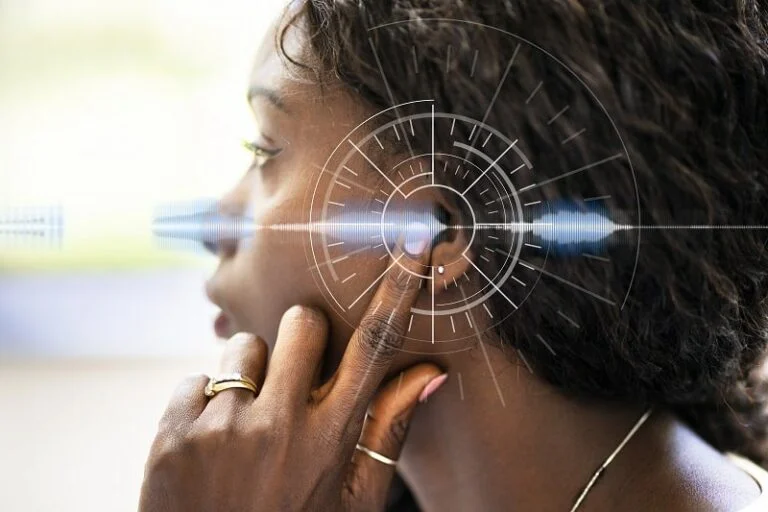
Blog Back Can I Program My Own Hearing Aids? January 10, 2022 If you wear hearing aids, you probably know that from time to time, they need to be programmed. Whether you are getting the right fit on new hearing aids or need to adjust the programming after some use, you might want to simply do it yourself. Although a hearing aid professional should always be the individual to program your hearing aids to ensure a good experience, you can get troubleshooting tips for when you don’t have professional help. Here are some things you should know about programming your own hearing aids. Can I program my own hearing aid? As noted above, hearing aid professionals must program your hearing aids for you. They are trained and experienced in programming hearing aids. However, in the future, there may be situations in which you can program your own hearing aid, but that is not the case right now. Things that are considered when programming your hearing aid First things first – you choose your hearing aid(s).Here are a few features that are considered when certain hearing aids are considered: Multiple frequency channels so you can adjust each frequency independently of the others A low delay processor, which reduces the echo perceived from a time delay between air conducted sound and amplified sound An adaptive directional microphone that automatically becomes directional in noisy situations so you don’t need to change programs. This can be very important for improving the quality of speech in noisy environments. An open fit that offers comfort (Open-fit hearing aids do not require custom ear molds.) A good feedback canceller, which allows greater amplification without whistling and is essential in open fit devices If you need help choosing a hearing aid, talk to your hearing aid professional. They will be happy to assist you. Adjust your hearing aids at home. You probably spend the majority of your time inside your home, so this is the ideal place to adjust your hearing aids. Using your hearing aids as much as possible, even alone in your home, ensures that everyday sounds are exactly the way you want. Try listening to the radio or TV while you wear your hearing aids to make sure everything is adjusted properly. Don’t be surprised if some household noises, like the sound of the fridge, sound louder. Listen to real sounds, like your own voice and someone else’s, while programming. Make sure you utilize your hearing aid manufacturer’s app! There are tons of tips and tools you can find on the app that is connected to your hearing aid. Use the tools you have to ensure you are getting the most out of your hearing aid(s). To learn more about hearing aid programming, we invite you to contact our office today. Share :
Should Hearing Tests Be Mandatory?
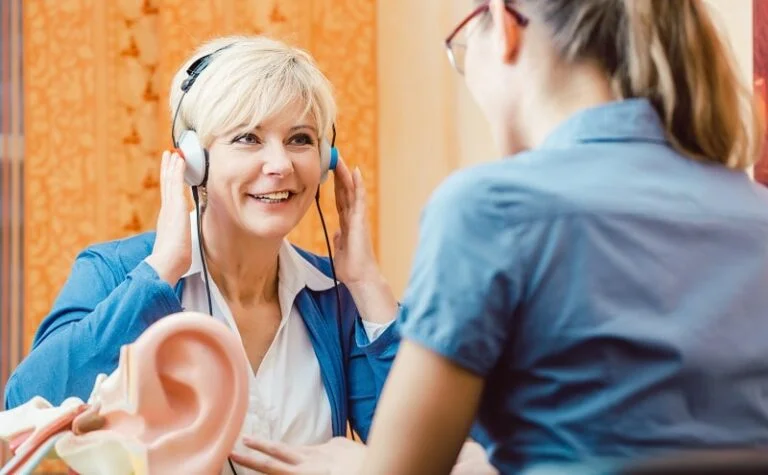
Blog Back Should Hearing Tests Be Mandatory? December 14, 2021 Do you know how often you should be getting your hearing tested, particularly once you are over the age of 55? A February 2020 study of 2,000 UK adults found that those over the age of 55 believed they should have their hearing checked every three years, yet the average amount of time since they last had their hearing tested was nine years.The reality—based on recommendations from audiologists—is that adults over the age of 55 should have their hearing tested every year. In fact, the British and Irish Hearing Instrument Manufacturers Association (BIHIMA) is calling for mandatory annual hearing tests for adults aged 55+.While regular hearing tests are important at all ages, they become even more important as you age. Age-related hearing loss is one of the most common conditions affecting older adults. Approximately one in three people in the United States between the ages of 65 and 74 has hearing loss, and nearly half of adults over the age of 75 have difficulty hearing. This means that as you approach the age where hearing loss commonly occurs, it is essential to have your hearing regularly tested so you can receive the treatment you need.Some audiologists believe that even 55 is too late to start annual hearing testing. Almost 30% of British and Irish audiologists surveyed by BIHIMA in December 2020 said that they recommended adults begin annual hearing tests before the age of 55. Regular hearing tests are important because your hearing affects your daily life—including your personal relationships, social life, career, and simple joys of life like listening to music or the sounds of nature. In addition, untreated hearing loss has been linked to a greater risk of other serious conditions, including depression, social isolation and loneliness, anxiety, falls, and dementia.To avoid these consequences, it is essential that you get your hearing tested regularly. If hearing loss is detected, follow your hearing professional’s recommendations for treatment, like using hearing aids. And if you are prescribed hearing aids, use them!Based on the studies and work done by the British and Irish Hearing Instrument Manufacturers Association, annual hearing tests over the age of 55 might become mandatory in the near future in the United Kingdom. Although it doesn’t look like annual hearing tests will become mandatory in the United States in the immediate future, these annual hearing check-ups are still critical.In the end, taking care of your hearing should be just as important and routine as other types of health care—like your regular dental visits and vision check-ups. You go to the dentist twice a year and the optometrist once a year (or once every two years before the age of 60). So, add in an annual hearing test! Your health, your relationships, and your quality of life will thank you.To learn more about the necessity of regular hearing tests and to schedule your next hearing test, we welcome you to contact our office today. We are eager to assist you. Share :
Is One Of Your Goals In The New Year To Exercise More? Well, There Is A Link Between Exercise And Hearing Loss

Blog Back Is One Of Your Goals In The New Year To Exercise More? Well, There Is A Link Between Exercise And Hearing Loss December 9, 2021 It’s December and 2022 is right around the corner. Have you started thinking about your new year’s resolutions yet? In 2020, the most common resolution was to exercise more. (This same resolution was made by 46 percent of those who made new year’s resolutions!) If exercising more is one of your new year’s resolutions for 2022, good for you! However, it is important to be aware that exercise is linked to hearing loss. Don’t worry too much though—you can exercise in safe ways that protect your hearing and keep you fit.How are exercise and hearing loss connected?Anyone who has stepped foot inside a gym knows it isn’t the quietest environment. You might hear the sound of dropped weights, the noise created by machines like ellipticals and treadmills, or the incredibly loud music being blasted by an exercise class like Zumba. Add on top some conversations and the fact that most gyms play music over the speaker system, and you have one noisy place.Exercise is linked to noise-induced hearing loss due to these very sounds. Audiologists have compared the potential noise of a dropped or smashed weight to the hearing danger posed by a shotgun blast or airbag deployment. Put that noise on repeat for 30-60 minutes, 3-5 times a week, and you have a recipe for noise-induced hearing loss. Furthermore, many exercise classes blast music at levels that are way above normal, safe volumes—often reaching 90-100 dB. If you have ever left the gym with ringing ears or muffled hearing, you have experienced damage to your hearing due to excessive noise.Another risk to your hearing is lurking in the weight room. Heavy exertion, like straining when lifting weights, results in intracranial pressure (pressure in the brain). This translates to pressure in the ears. If you hold your breath while lifting, this increases the pressure even more.This increased pressure in the inner ear can lead to a perilymphatic fistula (PLF), which is basically a small tear or defect in the thin membrane between the inner ear and middle ear. In most cases, people with a PLF are not immediately aware. Hearing changes typically occur later, when the strain of subsequent workouts causes fluid to leak into the middle ear through the tear. Symptoms of a perilymphatic tear include dizziness, fullness in the ears, tinnitus (ringing in the ears), or sensitivity to normal noises.How can you safely exercise while protecting your hearing?There are a few simple tips you can follow to protect your hearing while you exercise: If you strain while lifting weights, reduce the weight you are lifting. Never hold your breath while lifting weights. Wear earplugs while exercising. Keep your headphones or music at a reasonable volume. If you attend a gym or exercise class with music that is too loud, ask the instructor to lower the volume. Do not drop or bang weights while lifting. Do not participate in sports that can result in blows to the head. If you have hearing loss, wear your hearing aids while exercising. Of course, you can also choose forms of exercise that are gentle on the ears, like yoga, dancing, nature walks, hikes, and more.If you notice any symptoms of hearing loss or hearing changes after exercising, do not hesitate to contact your hearing professional. To learn more about how you can safely exercise while protecting your hearing, please contact our office today. Share :
The Connection Between Hearing Loss And Increased Fall Risk
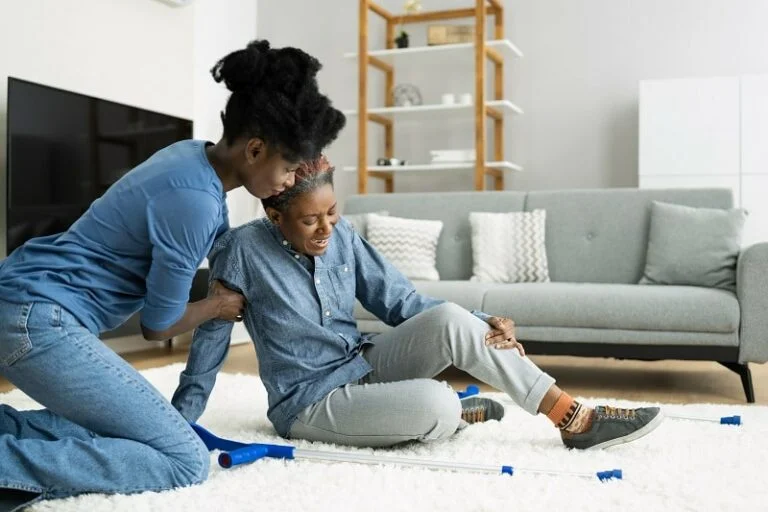
Blog Back The Connection Between Hearing Loss And Increased Fall Risk November 17, 2021 Do you remember the Life Alert commercials that made famous the phrase, “Help! I’ve fallen and I can’t get up”? While young people might find those ads rather humorous, falling is no joke. For older people, falling can be a significant fear—and a real risk. Balance naturally declines with age, which makes older people more likely to fall.Hearing also declines with age, and a growing body of research shows that hearing loss can increase the risk of falls. With both balance and hearing in decline as you age, the risk for falls can become high.How is hearing connected to balance?According to research, what you hear (and don’t hear) can directly affect your balance. A study of people aged 40 to 69 found that a 25-decibel hearing loss triples your chance of falling. That is the equivalent of going from normal hearing to mild hearing loss. Furthermore, the age range of the study participants (40-69 years of age) is the same range in which many people first experience hearing loss and are not accustomed to guarding against falls.While the link between hearing loss and balance is still being researched, audiologists have pinned down a few ways they are connected: Sound helps you balance. Researchers believe that people with poor balance benefit from auditory cues to help them avoid falls. In addition, stable sounds can help people keep their balance—similar to looking at one spot on the wall in order to help balance. If you have hearing loss and cannot hear those stable sounds, however, you are more likely to lose your balance and fall. Hearing uses up brain power, and so does balance. Mental resources are finite. If your brain is using up extra cognitive power to try to interpret sound due to hearing loss, it has less mental resource to assign to balance. Balance is cognitively demanding, so the extra strain of trying to hear with hearing loss can result in a loss of balance. Aging causes a decline in your vestibular sense. The vestibular sense is a set of receptors in your inner ear that come into play whenever you move your head. Your vestibular sense is also activated by the downward pull of gravity and helps you feel grounded. However, research shows that the vestibular sense may begin to decline around age 40. Loud low-frequency sounds can damage the inner ear, which can also disrupt your vestibular sense and result in balance (and hearing) problems.Of course, not all people with age-related hearing loss have inner ear problems, and vice versa. Hearing loss is linked to depression and anxiety. Untreated hearing loss increases your risk for depression and anxiety. If you are caught up in these mental issues, you may be less alert and more likely to fall. Furthermore, depression is linked to a greater incidence of falling, and increased falls lead to increased depression, which creates a difficult cycle. How can you reduce your risk of falling?Reducing your risk of falls can be simple. Stay active. Even activities as simple as walking can help to strengthen your muscles and reduce the risk of falls. Other good forms of exercise include balance exercises, resistance exercises, tai chi, water aerobics, and strength training. Get your vision checked. Your sense of balance has many contributing factors, including both vision and hearing. Be sure to keep your eye prescription updated. Tint-changing lenses and bifocals are less appropriate for older people. Wear your hearing aid. University of Michigan study found that a first-time hearing aid reduced the risk of fall-related injury by 13 percentage points in the next 3 years. Make your home safe. Do a walk-through of your home to make it more fall-proof. Make sure that the tops and bottoms of the stairs are well-lit and ensure that the stair railing is secure. Remove or secure any loose rugs or carpeting. Install grab bars near the toilet and in the shower or bathtub. Consider physical therapy. If you are unable to move as you would like, or if you have difficulty performing everyday movements like getting up from your chair, physical therapy may help. For more information about how you can treat hearing loss and reduce your risk of falls, we invite you to contact our hearing practice today. Share :
Hearing Loss & Vision Loss Double The Risk For Dementia
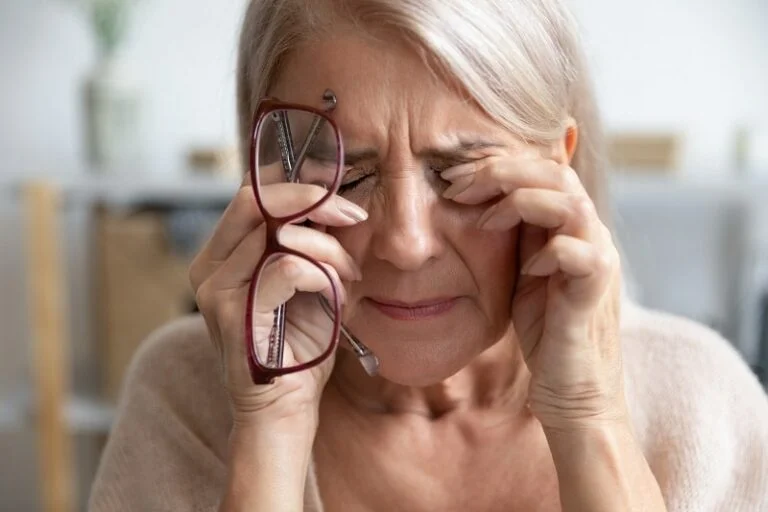
Blog Back Hearing Loss & Vision Loss Double The Risk For Dementia November 9, 2021 When you think of getting older, you might think of physical changes like hair turning gray or white, skin becoming more wrinkled, or increased difficulty in getting around. Hearing loss or vision loss may also come to mind—after all, it’s almost a stereotype for older people to wear reading glasses and hearing aids.In reality, many people do experience loss of hearing or eyesight as they age. In the United States, approximately one in three people from the age of 65 to 74 have age-related hearing loss, and about half of people older than 75 have difficulty hearing. In addition, approximately one in three people have some form of vision-reducing disease by the age of 65. It is clear that losing some hearing or eyesight as we age is far from rare.However, age-related hearing loss or vision loss can also affect your mind and memory. This was demonstrated in a new study that was published in the April 2021 online issue of Neurology, the medical journal of the American Academy of Neurology. The study found that people with both hearing and vision loss were twice as likely to have dementia than those who had normal seeing and hearing or only one impairment.The study followed 6,520 people between the ages of 58-101. The study participants were asked to complete a questionnaire that included questions about their hearing and vision. At the start of the study, 932 participants had normal hearing and vision, 2,957 had either visual or hearing impairment, and 2,631 reported that they had both. The researchers found that dementia was more than twice as common among those with both hearing and vision impairment at the beginning of the study.The study followed the participants during a six-year period. During those six years, 245 people developed dementia. After adjusting for factors like sex, income, and education, the researchers found that those with both hearing and vision impairment were twice as likely to develop dementia as those without impairment. They also found that participants with only one impairment were no more likely to develop dementia than those with normal hearing and seeing. Furthermore, when thinking tests were administered to the study participants, those with both hearing and vision impairment showed a steeper decline in scores.JinHyeong Jhoo, M.D., Ph.D., one of the study authors, noted that additional research is needed to better understand why having both hearing and vision loss increases the risk of dementia while having only one impairment does not. Researchers have hypothesized that the increased risk of dementia among this group may be related to greater social isolation and depression. People with only one impairment can often maintain their social lives to an extent, while those with both hearing and vision loss are more likely to experience social isolation and depression. In turn, social isolation and depression have been linked to a greater risk for dementia and cognitive decline.It is important to have your hearing and vision tested regularly so you can take steps to treat any conditions (like wearing hearing aids or glasses). To learn more about how you can protect yourself from dementia or to schedule an appointment with our hearing specialist, we welcome you to contact our office today. Share :