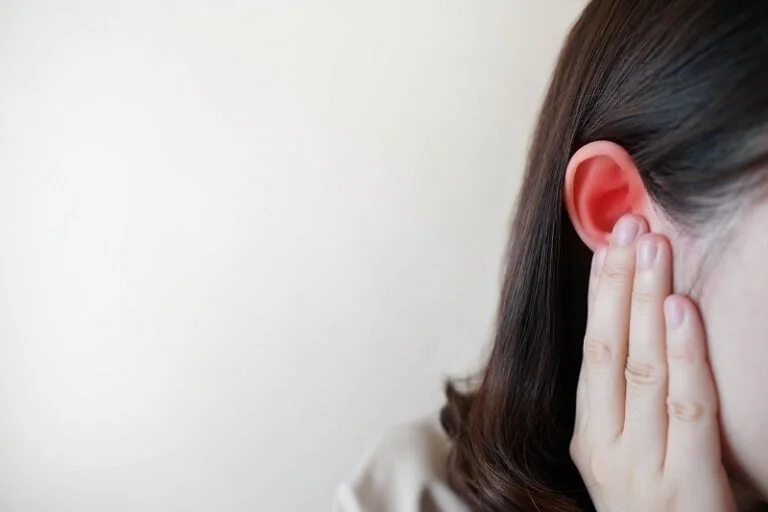
Blog Back What To Do If An Object Is Stuck In Your Ear June 21, 2022 Have you ever had something stuck in your ear? Part of a cotton swab is probably the most common thing to get stuck in an ear. However, people have had bugs, beads, batteries, and other foreign objects stuck in their ears. In most cases, you will feel pain, discomfort, pressure, or itchiness in your ear if something is stuck. You might also notice that your hearing is muffled, or you might feel nauseated or like you need to cough.This is what you should do if you get a foreign object stuck in your ear.If a bug is in your ear:While it might give you the creepy-crawlies just to think about it, it’s not that uncommon for bugs to get stuck in ears. There have been cases of cockroaches, moths, spiders, flies, ticks, and other small bugs crawling into ears. If you feel like something is crawling around in your ear, or if you hear a sound that you think might be a bug, chances are good that a bug has indeed crawled into your ear and now can’t find the way out.To remove a bug from your ear, follow these steps: Lie on your side with the affected ear facing up. Pour warm mineral oil or vegetable oil into the ear until it is full. Wait for 5-10 minutes. This ensures that the bug (and any larvae) are dead. Turn your head and allow the oil to seep out. You can gently pull on your ear to help move things around. Hopefully, the bug will fall out. If the bug does not fall out, flush your ear with a 1:1 mixture of hydrogen peroxide and water or rubbing alcohol and water. If the bug is still in your ear, you should seek professional help. An urgent care doctor may be able to help, or you can see a hearing specialist or ENT. They will have the tools necessary to remove the insect. If a piece of your hearing aid is stuck in your ear:Although it is unlikely, a part of your hearing aid, such as the dome, may come off of your hearing aid and get stuck in your ear. If you remove your hearing aids and notice any pieces missing, contact your hearing specialist as soon as possible. They will be able to remove the part from your ear or refer you to someone who can.If a button battery is stuck in your ear:Since button batteries are so small, they can get stuck in your ear. If this happens, contact a hearing specialist immediately because the battery can leak harmful chemicals into your ear. Do not put any liquids in your ear.If an earring part is stuck in your ear:Because metal parts of earrings can perforate the eardrum, it is best to contact a hearing specialist if you have part of an earring stuck in your ear.If a piece of food is stuck in your ear:You can try flushing out the piece of food by using the same steps listed above for insect removal, but use water or saline instead of oil. If this does not work, seek help from a hearing specialist immediately. Pieces of food can decay and lead to infection.If you have any of these objects—or anything else—stuck in your ear, it is important to seek professional care to ensure that your ears are not damaged. To learn more about what to do if a foreign object is stuck in your ear, please contact our hearing specialist today. Share :
Author: sitemanager
6 Ways To Prevent Your Hearing Loss From Getting Worse

Blog Back 6 Ways To Prevent Your Hearing Loss From Getting Worse June 11, 2022 Do you have hearing loss but haven’t sought treatment? Are you hoping it’s temporary and may resolve on its own? While hearing loss is often permanent, there are some ways you can help prevent your hearing loss from getting worse. Here are six simple tips for protecting your hearing, whether or not you already have hearing loss: Wear hearing protection.Loud noises can contribute to hearing loss. If you know you are going to be around loud noises, such as machinery, lawn equipment, jet engines, or a noisy crowd at a concert or event, it is best to protect your hearing by wearing protection. Earplugs or headphones can help to block out the bulk of the noise and protect you from noise-induced hearing loss.Of course, depending on your lifestyle, you may need to use hearing protection more or less frequently. If you are around excessive noise only a couple of times a year at concerts or games, you will only need to wear hearing protection on those occasions. By contrast, if you work in a noisy environment such as at a construction site, a landscaping business, or an airport, you may need to use hearing protection on a daily basis. Avoid noisy environments when possible.The other solution to handling noisy environments is to avoid them altogether when possible. Harmful noise levels—especially if they reach 85 decibels or higher—can cause temporary or permanent damage to your hearing. Avoiding these noisy environments altogether can help to protect your hearing. Beware of ototoxic drugs.Certain medications are ototoxic, which means they can cause damage to the inner ear. This damage can lead to hearing loss or can worsen existing hearing loss. If you are prescribed a medication that is ototoxic, do not stop taking it without speaking with your doctor first. Ask your doctor if there are any alternative medications and possible ways to mitigate the risk of hearing damage. Keep earwax buildup under control.Earwax (also called cerumen) can build up in your ears and cause hearing difficulties. Your ears usually push out excess earwax, but sometimes buildup can occur that leads to a blockage. Talk to your hearing specialist if you believe earwax buildup might be causing problems with your hearing.You can also remove excess earwax at home (as long as you do not have an eardrum perforation) by gently softening the earwax with drops of warm olive oil, almond oil water, or a commercial earwax removal solution. Don’t forget to consider total wellness.With your body, everything is connected. Hearing loss often does not only affect your ears. It may be linked to other conditions like diabetes, heart disease, kidney disease, dementia, and more. Although the exact connection between these conditions is still being researched and may not be clear in your situation, keep total wellness as your goal. Talk to your hearing specialist about how your hearing health can affect your overall health and you can promote overall wellness. Take advantage of technology.You don’t have to live with untreated hearing loss. Thanks to technology, you can manage hearing loss through the use of hearing aids. Wearing hearing aids can help you hear sounds you wouldn’t be able to on your own—helping you enjoy social situations, hear conversations, and listen to the sounds of nature. In addition, using hearing aids can help you preserve the hearing you have.If you would like to learn more about how to protect your hearing, even if you already have hearing loss, we welcome you to contact our hearing specialist today. We are eager to assist you. Share :
How Head Injuries Can Affect Your Hearing And Balance

Blog Back How Head Injuries Can Affect Your Hearing And Balance May 22, 2022 Have you ever had a head injury? You may know that a traumatic brain injury (TBI) can cause symptoms like memory loss, confusion, and headaches. However, a head injury can affect your hearing and balance as well.How does a traumatic brain injury affect your hearing and balance?The force of a traumatic brain injury can damage or dislodge the delicate bones of the inner ear, disrupt parts of the brain responsible for auditory processing, or rupture the eardrum. These issues may result in a persistent ringing, buzzing, or hissing sound in one or both ears. Some head injury patients also report experiencing hyperacusis, which is an extreme sensitivity to sound. Traumatic brain injuries may result in hearing loss or difficulty hearing in one or both ears.Furthermore, head injuries that affect the inner ear may disrupt the vestibular system, which is made up of tiny fluid-filled canals that send messages to your brain about the head’s position. If the vestibular system is affected, you may experience symptoms like dizziness, spatial disorientation, difficulty finding footing or judging distances, or a feeling that you or your surroundings are in motion.Is hearing loss caused by a head injury permanent?Fortunately, most cases of hearing loss caused by a TBI are not permanent. These cases of hearing loss typically resolve themselves within a few months. As the brain heals from the injury, the auditory processing system recovers as well. If the head injury causes a bone fracture or displacement that affects your hearing, corrective surgery usually resolves the issue.Occasionally, hearing loss caused by a traumatic brain injury is permanent. This may occur when irreparable damage occurs, such as severe damage to the cochlea. Thankfully, this is rare.How can you treat a traumatic brain injury?Head injuries should be treated by a medical professional as soon as possible. Head injury brings a risk of hematoma (bleeding in the brain), so imaging will be necessary to evaluate the damage. If the injury to the ear is physical, such as a displaced bone, this is usually apparent in a CT or MRI scan. Neurological causes of hearing loss can be more difficult to diagnose, but an audiologist can identify these issues through a critical evaluation.If you experience a head injury, be sure to see a physician right away for medical treatment. If you notice any changes to your hearing or equilibrium following the TBI, schedule an appointment with an audiologist as soon as possible as well. Hearing professionals are trained to assess situations like this and recommend any treatment options.How can you prevent hearing loss related to head injury?To prevent head injury, be sure to wear a helmet when you participate in potentially hazardous sports or recreational activities, such as football, horseback riding, cycling, or skateboarding. Always wear your seatbelt when you are driving or riding in a vehicle. In icy conditions, hold onto railings and step carefully to avoid losing your footing. Be careful when entering or exiting the shower or bathtub; many people fall on slick bathroom tiles every year.Prevention will always be the best way to avoid hearing loss and balance problems related to head injury.For more information about how hearing loss is related to head injuries or to schedule an appointment with our hearing professional, we invite you to contact our office today. Share :
Important Questions To Ask Your Doctor During Your Annual Physical

Blog Back Important Questions To Ask Your Doctor During Your Annual Physical May 11, 2022 Are you due for your annual physical appointment? Visiting your primary care doctor on an annual basis is good practice to ensure that you receive any screenings you need, to bring your doctor up to date on any changes in your health over the last year, to discuss any needed updates to your treatment, and to prevent more serious health concerns. While you might think your annual physical is more focused on checking your heart and blood pressure, it is important to bring up your hearing as well.Here are some important questions to ask during your annual physical appointment. By asking these simple questions, you can make certain that you receive the care you need and that your doctor is aware of any health challenges: How’s my hearing?While age-related hearing loss is common, age is not the only factor that plays into your hearing health. You can protect your hearing by avoiding excessive noise, wearing ear protection when exposed to high levels of noise (like power tools, machinery, or lawn equipment), eating healthy, and keeping objects like cotton swabs out of your ears. It’s also important to schedule regular hearing evaluations to make sure that any hearing loss is treated promptly.Your primary care doctor will be able to give you some guidance on what hearing services might be needed and can refer you to a hearing health professional if necessary. Am I due for any vaccines?You might think you were done with vaccinations when you were a child; after all, receiving recommended vaccines is a big part of pediatric healthcare. However, some regular or special vaccines may be appropriate based on your age, health, and travel plans. If you need any vaccines that cannot be administered during your annual physical, the doctor’s office will be able to schedule those immunization appointments. How’s my mental health?Your mental health and your physical health are inseparably connected. If you have noticed a change in mood, a lack of energy or drive, or a withdrawal from social activities, you may be experiencing an issue related to mental health, emotional health, or physical health—like hearing loss. Be open and honest with your doctor. He or she will be able to give you direction on where you can receive the care you need. What health problems am I at risk for?Each person’s health risks vary. The health issues you may be at risk for depend on your age, family history, race, sex, and lifestyle. Some health risks are tied to other issues. For example, heart disease, diabetes, depression, cognitive decline, and falls have all been linked to untreated hearing loss. Your doctor can help you become aware of any health issues you are at risk for and practice prevention. What types of exercise should I be doing?Staying active is important to the health of your heart, lungs, muscles, brain, and more. Many health problems, including hearing loss, are associated with decreased physical activity. Talk to your doctor about the types of exercise he or she recommends for you. What is this?If you have noticed any changes in your health that you don’t understand, or if you simply aren’t sure if something is a problem (like that new spot on your skin, the ache in your elbow, or the ringing in your ears), bring it up with your doctor. Your annual physical is the perfect time to bring up anything you might have a question about. It can be helpful to write them down beforehand so you remember everything you wanted to talk about during your appointment. Seeing your doctor regularly is a great practice for protecting your health, including your hearing health. To learn more about the importance of annual physicals and how your overall health is related to your hearing health, we invite you to contact our office today. Share :
6 Reasons To See A Hearing Professional If You Are Considering Buying Over-The-Counter Hearing Devices
Blog Back 6 Reasons To See A Hearing Professional If You Are Considering Buying Over-The-Counter Hearing Devices April 25, 2022 For a few years now, we have all been told that over-the-counter (OTC) hearing aids are right around the corner. In July 2021, President Biden signed an executive order allowing hearing aids to be sold over the counter. While the goal of making hearing devices more accessible is a great one, OTC hearing devices are not without concerns. Can OTC products ever compete with the knowledge and expertise of a specialist? And are home solutions a good option? Because you deserve the best hearing care available, here are six reasons to make an appointment with a hearing professional before you make your decision. Hearing professionals have expertise.Hearing aid specialists are licensed to sell hearing aids. They have been specially trained in hearing loss and its treatment. Thanks to their specialized training, hearing professionals can ensure that your hearing is properly diagnosed, that you get the right kind of hearing aid, that it fits properly, and that it is correctly programmed. You’ll get a better fit.Hearing aids must be custom fitted to each individual to maximize comfort and functionality. They must also be programmed to support your hearing needs and listening lifestyle. Only a trained hearing professional can fit and program your hearing aids. In addition, a hearing professional can monitor your progress over time and make any needed adjustments. It is important that you have ongoing support from a professional, especially at the beginning when you are getting used to your hearing aids. It is safer to choose a hearing professional.Evidence shows that choosing a one-size-fits-all solution or programming your own hearing aid can actually be harmful. This is because using a hearing device with a volume that is too loud can further damage your hearing. Furthermore, an ill-fitted hearing aid can lead to earwax buildup, which may cause infections. Choosing a hearing professional can help to ensure that your hearing aid is properly programmed and fitted so you can avoid these problems. You can receive support for tinnitus and balance.For many people, hearing loss occurs alongside tinnitus, which is a ringing, clicking, or buzzing sound in the ears. While researchers do not yet fully understand this condition, anything that is known falls under the realm of hearing professionals. Additionally, the inner ear governs the body’s equilibrium, so balance issues are often diagnosed and treated by hearing professionals. Seeing a hearing professional will ensure that you receive the care and support you need for tinnitus and balance, as well as hearing loss. You’ll build a patient-provider relationship.As noted above, hearing loss may be associated with other conditions. Because it is a complex condition, hearing loss can also be caused by various factors, from age or noise exposure to disorders. A hearing professional can diagnose and treat many hearing-related conditions, creating an ongoing relationship with you as their patient. Invest in your hearing health.One of the benefits of OTC hearing aids is that they tend to be more affordable than custom-fitted ones. However, seeking treatment from a hearing professional is a better investment in your health. Our hearing professional will be with you every step of the way, from diagnosis to choosing a hearing aid to fittings and adjustments. Hearing professionals can also provide affordable solutions so you can treat hearing loss at a price that works for you. To learn more about the benefits of seeing a hearing professional for your hearing aids, we welcome you to contact our office today. We look forward to caring for you! Share :
8 Insights Into How Your Family Feels About Your Hearing Loss

Blog Back 8 Insights Into How Your Family Feels About Your Hearing Loss April 11, 2022 If you have hearing loss, you may feel like your family members don’t understand your hearing challenges. You may feel that they never will understand your challenges unless they experience the same challenges for themselves. However, there is more to the story. While you certainly face challenges due to hearing loss, so do your partner and other family members. Here are a few insights into what both parties may be thinking. They notice your hearing loss even when you don’t acknowledge it.Many people experience hearing loss for years before they acknowledge it and get hearing aids. And even when you do get hearing aids, you may be inclined to keep them in the drawer instead of wearing them. In the meantime, your family deals with listening to an overly loud TV, repeating themselves until you understand, and hoping you heard important information. The truth is that wearing hearing aids can help both parties, but the one with hearing loss must acknowledge that first. You get annoyed when they say “never mind.”It’s a common scenario: A family member is telling a joke or recounting a story, and because of your hearing loss, you miss the punchline. But when you ask them to repeat what you missed, they say “never mind.” This is frustrating for you, of course, and you may feel hurt or angry. It is also annoying for your family member, who missed out on sharing a moment or a laugh with you. You ask your partner to change how they talk to you.Due to hearing loss, you may ask your partner to not speak to you with their back to you or from another room, to speak slower or louder (but not too slowly or loudly), and to make direct eye contact when they speak to you. While these changes are necessary for you to better understand your partner, it can be frustrating to them. After all, these changes are completely different from how they have spoken to people with normal hearing their entire lives. You may bluff when you don’t understand what they say (and they probably know).If a family member says something and you don’t quite understand, you may bluff rather than ask them to repeat themselves. In many cases, your family member can tell you are bluffing—and that’s annoying to them. It also places them in a tough spot because you may feel embarrassed if they call you on your bluff. You won’t confirm important information.If your partner gives you critical information, such as where and when to meet, they may ask you to repeat it back to them to confirm that you heard correctly. This may feel insulting and you may resist doing so. However, if you misheard due to hearing loss, it causes even more confusion and upset. You tune out when you cannot hear—and your partner doesn’t know what to do.Because of your hearing loss, you may find yourself tuning out in situations when you cannot understand very well, such as social events or conversations. This leaves your partner wondering what their role should be. Should they repeat everything to you, or leave you be? Should they speak up for you, or let you advocate for yourself? These situations are rough for all involved. You can talk to your partner, but they cannot respond.You may not be able to understand your partner in certain scenarios, such as when you are driving and cannot look at them, when you have a headache, or when you have auditory fatigue. In these cases, you can still speak to your partner, but they cannot respond to you in a way that you will understand. This can lead to frustration on both sides. You feel grief over your loss, and so does your partner.You will experience the five stages of grief (denial, anger, bargaining, depression, and acceptance) as you come to terms with your hearing loss—and so will your partner. You will mourn things differently. You will feel saddened that you cannot hear as you once did or that you cannot participate in social situations. (Thankfully, these issues can largely be solved with hearing aids!) Your partner will mourn the way they once communicated with you, the intimate late-night conversations in bed, the whispers during movies, and other shared experiences that are now much more challenging. Coming to terms with hearing loss and its effects can be difficult for you and your family members. For both parties, patience and communication are key. For more information about how to better navigate hearing loss with your family, we invite you to contact our hearing practice today. Share :