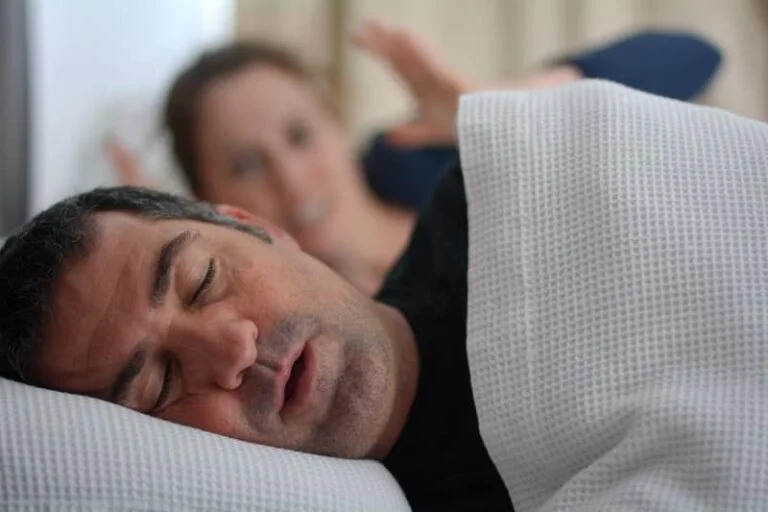
Blog Back Hearing Loss And Sleep Apnea January 10, 2023 If you have been diagnosed with sleep apnea, your doctor may have told you that sleep apnea puts you at increased risk for a number of other health conditions, including heart problems, high blood pressure, type 2 diabetes, metabolic syndrome, liver problems, and more. However, did you know that sleep apnea also increases your risk for hearing loss? What is sleep apnea? There is more than one type of sleep apnea, but the most common is obstructive sleep apnea (OSA). Obstructive sleep apnea occurs when the airway is obstructed during sleep, typically when the muscles in the throat relax or when the tongue falls back in the mouth. This results in pauses in breathing and causes the person to wake up, often feeling out of breath. Obstructive sleep apnea is often associated with snoring. Other common symptoms of OSA include excessive daytime drowsiness, irritability, difficulty staying asleep, awakening with a dry mouth, gasping for air during sleep, and difficulty paying attention while awake. Factors that increase a person’s risk for OSA include excess weight, being older, being male, greater neck circumference, smoking, and use of alcohol or sedatives. What is the link between sleep apnea and hearing loss? According to a 2022 study published in the journal Clinical Otolaryngology, people with sleep apnea are 21 percent more likely to have hearing loss. The study observed nearly 7,000 older adults in Europe. Based on the results, the study authors urge people with obstructive sleep apnea to undergo screening for hearing loss. While this study is the most recent one to explore the connection between sleep apnea and hearing loss, it is not the only one. Another study assessed almost 14,000 using in-home sleep apnea studies and on-site audiometric testing. The researchers found that hearing impairment was more common among those who snored, had a higher body mass index (BMI), and had severe sleep apnea. An additional, smaller study analyzed the oxygen levels of people with severe obstructive sleep apnea. Those with the lowest oxygen levels were much more likely to have hearing impairment. These studies show that a link exists between hearing loss and sleep apnea. However, researchers are not exactly certain what causes the connection. One theory is that because sleep apnea reduces blood flow to the ears, the ears do not receive enough blood supply to work properly. Another hypothesis is that years of snoring (strongly associated with sleep apnea) can cause damage to the ears’ sensitive hair cells. This would result in sensorineural hearing loss, with is the most common type of permanent hearing loss. How can you reduce the risk of hearing loss if you have sleep apnea? If you have sleep apnea, the best thing you can do for your hearing health and your overall health is to treat your sleep apnea. For most people with OSA, the recommended treatment option is a continuous positive airway pressure (CPAP) machine that is worn while you sleep. Oral breathing devices may also be available to treat sleep apnea. Other sleep apnea treatments include surgery to correct a blockage and medicine to help you stay awake during the day. In addition, your doctor may suggest lifestyle changes like weight loss or smoking cessation. If you have sleep apnea or you snore, it is important that you receive a hearing screening. Treatment is also available for hearing loss. To learn more about the connection between sleep apnea and hearing loss, and to schedule your appointment with our hearing specialist, we invite you to contact our office today. Share :
Category: Uncategorized
Are Your Bad Habits Affecting Your Hearing?

Blog Back Are Your Bad Habits Affecting Your Hearing? December 14, 2022 Do you have a bad habit you want to break in the New Year?A habit is a way of behaving that is repeated and occurs subconsciously. These everyday actions become part of us and our identity. Some practices are harmless, while others may appear harmless but are detrimental to our health. Habits can be changed, and it is our responsibility to identify those habits that are harmful and rid ourselves of them. Some habits can harm hearing health. Here are a few of those habits and some steps you can take to rid yourself of them. Protecting your hearing is vital, so it is essential to take steps to protect this precious gift.SmokingSmoking is harmful to your health. It is no secret that cancer, heart disease, and respiratory problems are directly related to nicotine addiction. Your hearing health is also affected by smoking. Nicotine and carbon dioxide from cigarette smoke tighten the blood vessels in your ears, resulting in restricted blood flow. This depletion of oxygen damages the hair cells in the inner ear resulting in hearing loss.However, there is some good news, and the benefits of smoking cessation begin just 20 minutes after you quit. Blood pressure drops and circulation improves, which benefits the flow of blood to your ears. If you smoke and would like to stop, check out the American Lung Association or smokefree.gov for help in quitting the habit.VapingVaping is much like cigarettes in the way it harms your hearing health. E-cigarettes that contain nicotine affect your hearing in the same way as traditional tobacco. Furthermore, these e-juices, filled with chemicals, affect our health in ways that remain unknown. The hidden dangers of vaping are particularly dangerous for young people due to the variety of enticing e-juice flavors.DrinkingExcessive consumption of alcoholic beverages causes numerous problems. It can affect your brain, which can also impact your hearing. Consuming alcohol over long periods damages the central auditory cortex, which is the part of your brain that processes auditory signals. The auditory cortex can shrink as a result of excessive drinking impacting the nerve responsible for processing sound. If you are trying to kick this habit and need some help, contact alcoholics anonymous or use the Behavioral Health Treatment Services Locator.Poor Dental CareBrushing and flossing your teeth not only brightens your smile, but it also helps you hear better. By practicing good dental care habits, you free your mouth from bacteria that can cause infections in your mouth. This oral bacterium can make its way into the bloodstream. Once there, it may cause inflammation and narrowing of the arteries. Hearing health then suffers due to poor circulation. So be sure to brush, floss, and rinse regularly for good dental and hearing care.Simply Ignoring A Hearing LossThis last entry may be the most detrimental of all. Ignoring a hearing loss will not make it go away. The long-term health risks associated with disregarding a hearing loss are many and can seriously affect your health. If you have difficulty hearing, now is an excellent time for a hearing evaluation with a hearing healthcare professional. Share :
Mounting Evidence Suggests Connections Between Hearing Loss And Cognitive Impairment – Even In Young Adults

Blog Back Mounting Evidence Suggests Connections Between Hearing Loss And Cognitive Impairment – Even In Young Adults December 6, 2022 Over the past several years, studies have indicated a connection between hearing loss and cognitive impairment. While this connection may not be intuitive, mounting evidence from studies across different age groups shows that such a connection does exist.The majority of past studies focused on older adults, and the findings indicated connections between increased prevalence of dementia and hearing loss, as well as increased difficulty in verbal comprehension and working memory. Determining the causal relationship of such findings is difficult; for example, hearing loss can increase the risk of dementia through reduced social interaction and increased stress and depression. However, it has also been theorized that hearing loss contributes to dementia and other cognitive impairment by draining neural resources through increased listening effort; these neural resources are then unable to be allocated to other cognitive processes.Although several studies, including those referenced above, focused on hearing loss and cognitive impairment in older adults, one recent study instead examined this connection in younger adults. In this study, researchers monitored the brain activity of 35 young healthy adults between the ages of 18-41 in response to sentences of varying syntactic complexity. As expected, the classic language network of the brain, located in the left frontotemporal cortices, displayed greater activity when the test subjects were given sentences of greater complexity.However, not all of the findings were as expected; when the test subjects were given complex sentences, increased brain activity also emerged in the right anterior prefrontal cortex, showing a negative correlation with hearing acuity. This type of right frontal activity, indicating brain plasticity, has been previously documented in older adults during language tasks, but it had not been documented in such young, healthy adults. After controlling for age, the right frontal cortex activity still showed a strong association with hearing acuity.While further longitudinal studies are needed to investigate the connection between hearing loss and cognitive ability in younger adults, these findings are still a strong indicator that hearing loss can contribute to cognitive impairment in younger adults. It is hypothesized that the increased brain activity, signaling brain elasticity, may imply depletion of neural resources in the future, ultimately leading to a greater risk of dementia.So what can be done, especially for young adults, to avoid hearing loss-related cognitive impairment? Young adults are increasingly exposed to noise at dangerous levels on a regular basis; in fact, according to surveys, more than 90 percent of college students use personal music devices, and almost half of these students listen to their music at high volumes that exceed safety standards for occupational noise exposure. This increases the risk of early hearing loss in adolescents and young adults.To reduce the risk of hearing loss and associated cognitive impairment, it is essential for young adults to avoid exposure to such high volumes of music and other noise. By protecting their hearing, young adults can reduce the risk of dementia, other forms of cognitive impairment, and various negative effects on their wellbeing connected to hearing loss.For more information on how you can protect your hearing and how to treat hearing loss, please contact us today. Share :
How Do You Know Which Hearing Aids To Choose?
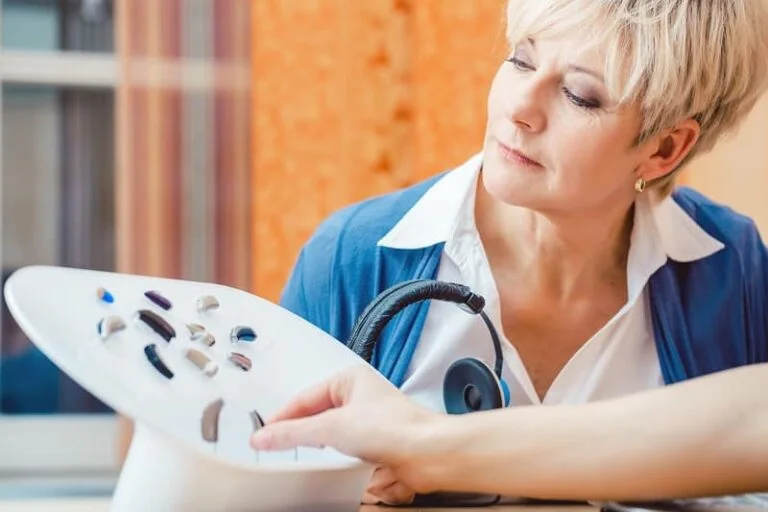
Blog Back How Do You Know Which Hearing Aids To Choose? November 28, 2022 If you have hearing loss, your hearing professional may have recommended that you wear hearing aids. Your journey with hearing aids starts with you choosing your devices. But with so many hearing aids out there, especially with over-the-counter devices now available, how do you know which type of hearing aids to pick? Here are a few things to consider as you select your hearing aids.Hearing LossMany people have hearing loss, but no two people have the exact same hearing loss. Your hearing is unique and your hearing aids should be chosen with your specific hearing loss in mind. Talk to your hearing aid professional about your hearing loss and the types of hearing aids they recommend for your individual hearing needs.One tip to keep in mind: get hearing aids for both ears. Even if you only have hearing loss in one ear or hearing loss is more severe in one ear, you should wear hearing aids in both ears.SizeThe size of your hearing aid will play a role in how easy it is for other people to see your hearing aid. If it’s important to you that your hearing aid is nearly invisible, talk to your hearing professional about getting a smaller device.The size of your hearing aid might depend on more than personal preference. Size can be determined by factors like the shape of your ear, your type of hearing loss, and how advanced you want your hearing aids to be.StyleYears ago, most hearing aids came in just one style. However, today’s hearing aids come in a wide variety of styles. This includes different sizes, colors, finishes, features, and more. You can decide whether you’re comfortable with a “traditional” looking hearing aid or if you prefer a more modern style.TechnologyAgain, modern hearing aids come with a wide range of available features. These include technology features like Bluetooth, phone connectivity (if you have a smartphone like an iPhone, Android, or Google phone), connectivity for your TV or computer, control features from a phone app, and more. Talk to your hearing aid professional about how tech-savvy you are and how technologically advanced you want your hearing aids to be. With such a wide range of options, you’re sure to find one that fits your technology needs.LifestyleDo you work? Do you enjoy being active? Do you often participate in outdoor activities? Do you use a cell phone? Do you use a landline? Do you use a radio? All of these factors (and more) should be considered when choosing your hearing aids. Your hearing aid professional will be able to recommend hearing aids that best fit your lifestyle and your specific needs.CostThis might be the elephant in the room: cost. More advanced hearing aids are more expensive, while more basic ones are less expensive. Thankfully, there are effective solutions for any price range. Be open when talking to your hearing professional about the cost you are comfortable with. Many hearing practices can offer payment plans, so ask about that as well.The bottom line is that choosing hearing aids should take into account several factors—and in the end, the selection is very personalized. The best way to get the best hearing aids for you is to work with a hearing aid professional who can consider all of your needs and desires to help you make the best choice. For more information and to set up your appointment with our hearing professional, we welcome you to contact our office today. Share :
Everything You Need To Know About Over-The-Counter Hearing Aids

Blog Back Everything You Need To Know About Over-The-Counter Hearing Aids October 23, 2022 Hearing aids have been approved for over-the-counter (OTC) use. Congress passed the Over-the-Counter Hearing Aid Act of 2017 to make hearing aids more accessible for adults with mild to moderate hearing loss. Several manufacturers already sell them online, and the devices are slated to hit the shelves once the law takes full effect in October 2022. These devices will be sold directly to consumers without an exam or a fitting by an audiologist. With this new option, you may be wondering whether OTC hearing aids are right for you. Here are a few things you need to know about OTC hearing aids.Where can I get OTC hearing aids?OTC hearing aids are already being sold online. They will soon be available in pharmacies, stores, and doctors’ offices. If you choose to purchase OTC hearing aids, be sure they come with a comprehensive return policy.How are OTC hearing aids different?Over-the-counter hearing aids are not exactly like hearing aids you receive from a hearing aid specialist. Here are a few differences: Who fits them: Prescription hearing aids are fit by an audiologist or hearing specialist. OTC hearing aids are self-fit. Diagnosis and testing: A hearing specialist conducts hearing tests and diagnoses using advanced equipment. For OTC hearing aids, you will conduct your own approximated self-test and diagnosis depending on the product purchased. Degree of hearing loss: Prescription hearing aids can be used to treat any level of hearing loss, from mild to severe. OTC hearing aids are only for self-perceived mild to moderate hearing loss. Design: Prescription hearing aids are available in a full range of designs, including discreet custom options. In contrast, OTC hearing aids are available in limited designs with a one-size-fits-most approach. Intended user: People of any age and any medical status can use prescription hearing aids. OTC hearing aids are designed for adults (age 18+) with mild to moderate hearing loss. Am I a candidate for OTC hearing aids?You may be a candidate for OTC hearing aids if you have mild to moderate hearing loss. You may have mild hearing loss if you feel that you occasionally miss sounds or have difficulty hearing in loud, noisy environments. OTC hearing aids may be a good solution if the cost of prescription hearing aids is holding you back from treating your hearing loss.Who is not a candidate for OTC hearing aids?OTC hearing aids are not a good option for children or for those who have severe hearing loss. In addition, you should see a doctor (rather than purchase OTC hearing aids) if you experience sudden hearing loss, a sudden plunge in your hearing (even if it improves), a big difference in the hearing between one ear and the other, or tinnitus in only one ear. These may be signs of medical problems.Will I be satisfied with OTC hearing aids?A recent study found that users of “premium” prescription hearing aids showed the greatest satisfaction with their devices. One of the greatest factors study participants cited was comfort, specifically how the hearing aids processed background noise and how well they could hear speech in a group setting.That being said, you don’t know whether you’ll be satisfied with OTC hearing aids until you try them. If you decide to try out OTC hearing aids, you may also want to see a hearing aid specialist and consider prescription hearing aids as well.For more information about the pros and cons of OTC hearing aids, please contact our office today. Share :
Where Is The Best Place To Get Hearing Aids?
Blog Back Where Is The Best Place To Get Hearing Aids? October 11, 2022 You may have heard that hearing aids will soon be available over-the-counter at retailers like Walgreens and CVS. With hearing aids also available from a hearing care professional like an audiologist, at big box stores, and from online-only retailers, you have options when it comes to where you get your hearing aids. So, where is the best place to get hearing aids?Hearing aids have changed a lot in the last 20 years, but the answer to this question has not. Despite the availability of new options for accessing hearing aids (which will enable more people who need hearing aids to get them—great news!), the best place to get hearing aids is from a hearing care professional. Here are a few reasons why: Accurate solutions tailored to your needs.You are unique, and so is your hearing. You can think of it like your sense of taste; you don’t like all the same foods as everyone else. Your hearing loss is nuanced, unique, and complicated. For example, you may have hearing loss in one or both ears, and even if both ears are affected, the loss may not be the same in both. Other factors to consider when it comes to hearing loss include your hearing thresholds, which frequencies you struggle to hear, and more.Your hearing aid professional can make certain that your hearing aids are tailored to your personal hearing needs. In addition, your hearing professional can consider factors that would not come into play in an OTC environment, such as the types of listening environments you frequent, whether you are more active or relaxed, how tech savvy you are, whether you have dexterity issues, what you prefer when it comes to style and features, and much more.Your hearing aids should be unique to you. Choosing OTC or big-box hearing aid solutions does not give you the same personalized care as seeing a hearing aid professional. Hearing professionals can fit, program, and support your hearing aid in a way that is tailored to your specific needs. This is the best way to ensure reliable results and the benefits you need. Long-term care to support your investment.Let’s face it: hearing aids aren’t cheap. No matter where you purchase your hearing aids, they are a financial investment. Hearing aids are also an investment in better communication, your connection to other people, improved health and happiness, and better quality of life.The best way to make the most of your investment is to have your hearing aids fit, programmed, and supported long-term by a hearing aid professional. Your hearing professional will provide expert consultation, personalized fitting, and ongoing care. You deserve the best support when it comes to an investment this important. Expert services for high-tech devices.Today’s hearing aids are sophisticated devices. While a range of features and options are available, high-tech hearing aids can connect to your smartphone, computer, or TV, filter sounds in noisy environments, and much more. In addition, they are much smaller and lighter than they used to be!With such high-tech options available, you need an expert who knows how to make the most of every feature—and who can tell which features will work best for you. A hearing care professional has the knowledge and experience needed to help you achieve optimal benefits from your advanced hearing aids. The answer is clear: the best place to get hearing aids is from a hearing aid professional. To learn more about hearing aids and their benefits, we welcome you to contact our hearing practice today. Share :